

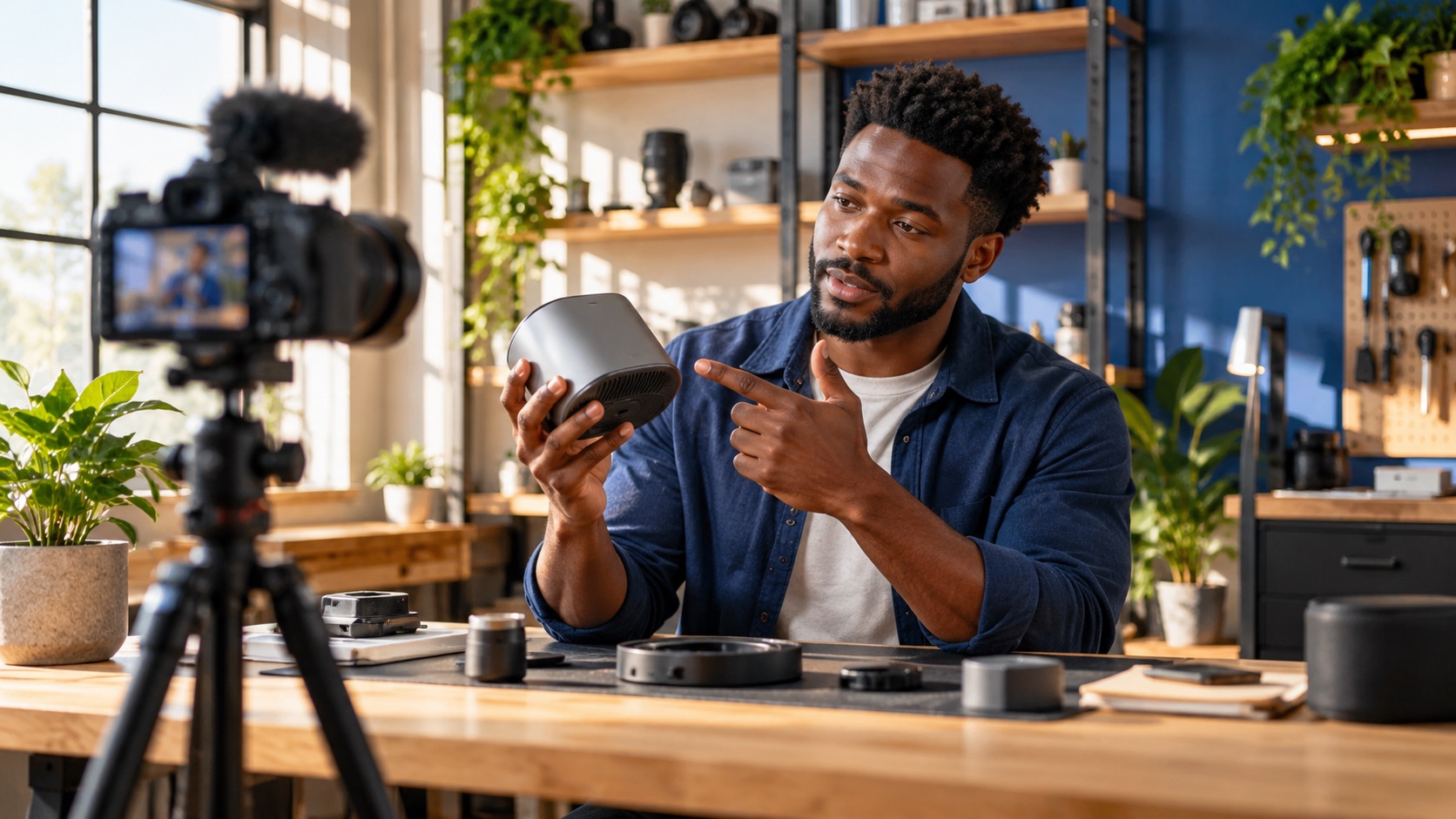
For high-consideration products, choose YouTube creators whose recurring content helps viewers evaluate the decision you need to influence. Compare relevant videos, audience evidence, integration quality, production requirements, and commercial rights. Subscriber count provides context but does not establish current reach or purchase intent.
Products that require explanation often benefit from a creator who can show trade-offs, answer objections, and demonstrate the product in realistic conditions. Discovery should therefore begin with the buyer's unanswered questions. A long video is not automatically useful, and a large channel is not automatically trusted on the particular decision the brand wants to address.
A camera, software tool, or specialist service can have several audiences: first-time buyers, experienced users, procurement teams, and people comparing alternatives. A campaign built around one of these groups will need a different creator, brief, and measurement plan from a campaign trying to reach everyone at once.
Build the search around a decision journey
List the questions a buyer asks before, during, and after a purchase. Before purchase, they may compare capabilities, cost, compatibility, and risk. During evaluation, they may want a demonstration or a difficult edge case. After purchase, they may need setup guidance. Assign each question a campaign role so creator research follows a clear editorial objective.
Search the question in several forms and watch the results. Note which creators repeatedly cover the relevant problem, which explain their testing method, and which acknowledge limitations. The useful unit of research is not simply a channel; it is a recurring relationship between an audience need and the creator's way of answering it.
Distinguish a dedicated review, integrated sponsorship, tutorial, comparison, and follow-up video. These formats create different production burdens and audience expectations. A tutorial can be useful for adoption while a comparison addresses evaluation. Ask the creator which format fits their viewers before drafting a script that assumes a particular level of attention.
Use audience evidence with its definitions intact
YouTube defines monthly audience as unique viewers across a rolling 28-day window and notes that some audience data may be limited.[1]
Request a dated audience summary for the relevant period, not an undated media-kit figure. Record what the creator can share, the metric definition, the format, and the window. If geography is unavailable or suppressed, preserve that limitation. Do not convert subscriber residence, comments, or a creator's address into an asserted audience location.
Compare recent relevant videos rather than mixing every format. A Shorts-heavy channel can have a different distribution pattern from its longer demonstrations. Separate formats and retain the sample size. If the brand wants a ten-minute tutorial, research the creator's tutorials, then ask about typical viewing behavior and production constraints for that format.
| Evidence | Question it answers | Limitation to record |
|---|---|---|
| Recent relevant videos | Can the creator explain this subject? | Sample and format |
| Audience summary | Who watches in the chosen window? | Missing or restricted dimensions |
| Integration examples | How does sponsorship fit? | Brand and brief differences |
| Production plan | Can the work be delivered? | Access, testing, and review time |
Review the quality of explanation, not only exposure
Watch the complete product integration. Does the creator introduce a real problem, show evidence, and make the next step understandable? Record where the brand appears, whether the demonstration uses a realistic setup, and how the creator handles uncertainty. A persuasive recommendation should not depend on hiding a limitation that matters to the buyer.
Comments can suggest questions for the brief, but they are not a representative survey. Tag recurring questions and distinguish product interest from general praise for the creator. If viewers ask about compatibility, installation, or cost, those themes can inform the demonstration. Avoid presenting a small comment sample as proof of customer demand.
Assess the creator's testing requirements early. A specialist may need several weeks of product use, access to technical staff, or permission to compare alternatives. That can make the assignment more expensive and slower than an integrated mention, while also making it more useful. The schedule should reflect the work that produces credible explanation.
- Buyer question
- Relevant video sample
- Testing scope
- Measured partnership
Create a scope and cost model for each format
An illustrative comparison might involve a $3,500 integration, a $6,000 dedicated tutorial, and a $7,500 multi-video package. These are invented quotes for planning, not market rates. Compare testing time, production complexity, posting obligation, revision scope, rights, and analytics access alongside each number.
Suppose the tutorial requires forty hours of preparation and production while the integration requires twelve. The effective quoted fee per planned production hour is $150 for the tutorial and about $292 for the integration. This is an internal comparison, not a fairness verdict: distribution value and opportunity cost are also part of the commercial offer.
Budget separate lines for translation, support staff, product shipment, licensed assets, and paid usage. A channel's quote may exclude those items. Record whether the product is a loan or a gift, when it must arrive, and who bears replacement or customs cost. These details can determine whether a creator is able to accept the collaboration.
| Format | Primary job | Scope question |
|---|---|---|
| Integration | Introduce a relevant option | How much demonstration is included? |
| Tutorial | Explain use and implementation | What testing and access are required? |
| Comparison | Help evaluate alternatives | What editorial independence is retained? |
| Series | Support a longer journey | Which milestones and rights renew? |
Separate platform access from commercial permission
YouTube's brand partner access feature enables specified partnership access; commercial usage terms still need a separate agreement.[2]
Document what the brand may do with the content and for how long. Organic hosting on the creator's channel, brand reposting, paid amplification, extracted clips, and edits are different permissions. Define whether advertising authorization can be withdrawn and what happens when the license ends. Access to an account or video should never silently expand the agreed scope.
YouTube requires creators to identify paid promotions using the platform's declaration process.[3]
Include the relevant disclosure, claims, and review responsibilities in the brief. Technical review should verify facts and product handling, while the creator retains the agreed editorial voice. If the brand needs a scripted advertisement rather than an independent review, make that format clear before commissioning the work.
Test an integration against a real buyer question
Consider a brand offering a specialized productivity device. It wants a creator to explain whether the device fits a professional's existing workflow. A quick unboxing may create curiosity, but the buyer needs a demonstration of setup, limitations, and daily use. The research team therefore reviews tutorial structure, question handling, and the creator's ability to discuss trade-offs.
One candidate has larger reach but mostly entertainment content. Another has a smaller audience and recurring practical tutorials. The team should not assume the second is better merely because the niche sounds relevant. It requests available audience evidence, reviews comparable videos, and asks how the proposed demonstration would fit the channel. The answer becomes part of the selection record.
The commercial conversation identifies several extra tasks: learning the product, testing it, recording screen or device footage, and responding to factual questions. Those tasks may not be visible in the final video's duration. The quote should cover them explicitly, along with publication and any brand reuse.
A bounded pilot can commission one substantive integration with a defined observation window and an agreed follow-up resource. The brand records audience questions and qualified actions without claiming every later purchase resulted from the video. This produces a useful decision about the next explanation, not just a view-count ranking.
Measure the job the video was hired to do
Choose a primary outcome before production. A tutorial might target qualified product-page visits or successful onboarding actions. An integration might target awareness among a relevant audience. A comparison might reveal which objections remain unresolved. Views can describe exposure, but they do not by themselves identify incremental sales.
Use a consistent observation window and keep organic and paid distribution separate. An illustrative reporting plan might capture results at seven, thirty, and ninety days. Those are chosen checkpoints, not guaranteed video lifetimes. Record whether the video was promoted, reposted, or affected by a product announcement during the window.
Track campaign links, conversion definitions, and the evidence available to both parties. A low volume of directly attributed purchases can coexist with useful buyer education, but that possibility should not become an excuse to invent attribution. Explain what the campaign observed and which conclusions remain uncertain.
Before renewing, ask three questions: did the creator deliver the agreed format, did the content answer the intended buyer question, and did the evidence justify the next investment? Renewing for a second tutorial can make sense if the first exposed a specific unanswered question. Repeating the same brief simply because the channel is large is a weaker decision.
- Define the buyer question and preferred format.
- Request a dated audience summary with metric definitions.
- Include product testing and shipment in the schedule.
- Specify rights separately from brand partner access.
- Choose one primary outcome and observation window.
- Review the delivered explanation before renewing.
Sources & References
- [1] YouTube — Understand your audienceOfficial definitions for audience, returning viewers, geography, and data limitations.↗
- [2] YouTube — Sharing brand partner accessOfficial brand partner access and paid promotion documentation.↗
- [3] YouTube — Paid promotionsOfficial instructions for identifying paid promotions and sponsorships.↗